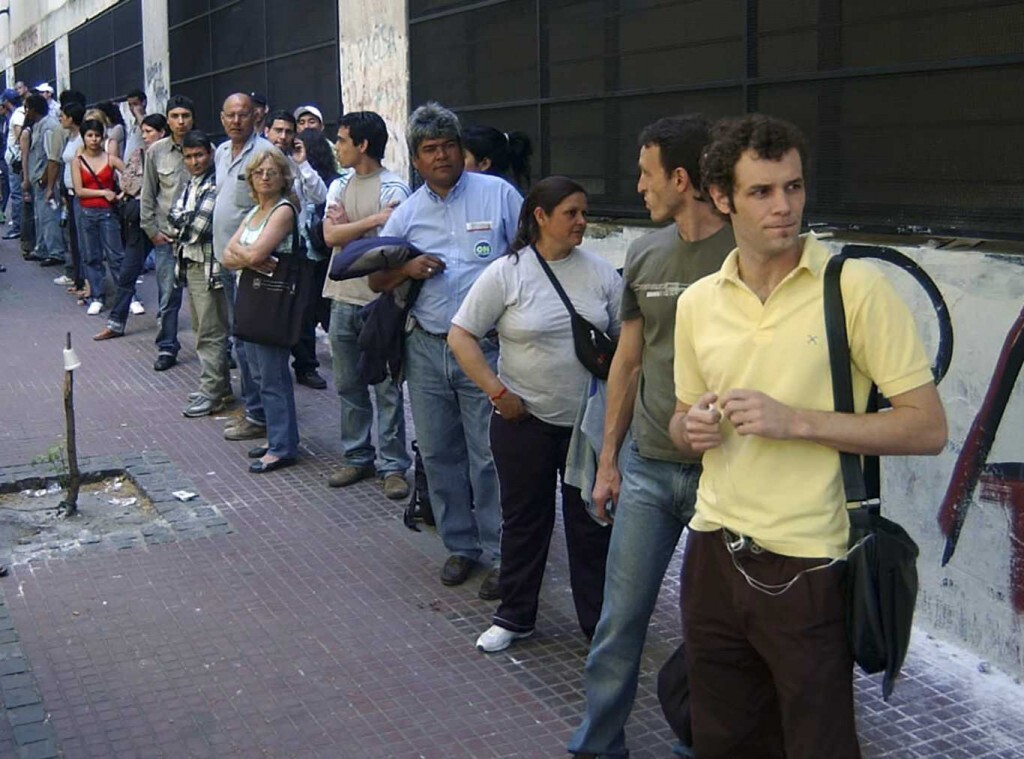
Buenos Aires, March 23 (NA) – While the economic activity rate remained virtually unchanged at 48.6%, indicating no mass exodus from the labor market, pressure on employment intensified: 7.5% unemployment by the end of 2025 and early 2026, a third of the active population seeking work or wanting to change their current job, and a 30% increase in labor informality. A wage gap persists, and formal employment typically earns more than informal work, verified by the Argentine News Agency. Half of the labor market operates outside formal frameworks, without pension contributions or social security. This is compounded by an underemployment rate of 11.3%, reflecting those who work fewer hours than desired and seek to expand their workday. Employees seeking work Nearly 23% of the active population is experiencing a labor crisis, including 3.7 million people with jobs who are looking for another job or more hours to make ends meet. Córdoba is the most critical case: 35.4% labor pressure, more than 1 in 3 with employment or income problems. They are called "demanding workers": they work, but need more because their salary is not enough, according to IERAL of Fundación Mediterránea. The economically active population grew from 14.53 to 14.60 million workers, meaning there was no massive entry into the market, but the imbalance was on the side of labor demand, which fell from 45.4% to 45%. Not only were no new jobs created, but net employment was also destroyed. More than a million people are unemployed in the country's main urban centers, confirming a shift in the labor climate. The economy is not absorbing the demand for work at the necessary pace, and tensions are beginning to emerge that transcend the specific number of the unemployed. Labor pressure not only includes those looking for work and not finding it, but also those who, even while employed, try to change or expand their labor situation. In the fourth quarter, this universe reached 30% of the economically active population, a level that clearly reflects the fragility of the current scheme. The unemployment rate for the female group aged 14 to 29 shows a variation of 3.0 p.p., while for the male group of the same age range it is 3.7 p.p. For the central age groups (30 to 64 years), for both women and men, rates remained stable. The largest increases in unemployment are registered among young people aged 14 to 29, for both men and women, with increases of more than three percentage points in the last year. This is the most vulnerable segment of the labor market, where insertion is more precarious and turnover is higher. Concentrated demand Regarding the distribution of job openings, there is a strong demand for technical and technological profiles, while labor supply is high in operational sectors, facing talent gaps in areas of specialization, especially technology. Demand in companies is concentrated on software developers, AI experts, data analysts, cybersecurity specialists, and DevOps engineers; on industrial, electrical, and chemical engineers for mining and oil, in agribusiness and commerce/ecommerce, on account executives and salespeople, and on nurses and surgical technicians, according to recent data from Bumeran, Fortuna, and Argentina.gob.ar. The supply of workers shows a high availability of labor at operational levels, but a scarcity in qualified profiles (engineers, programmers). In the structure of the labor market, the figure of the monotributista (simplified tax regime payer) is growing. There are already more than 4.7 million workers enrolled in the monotributo at the end of 2025, a historic high. This regime has consolidated as a main alternative to informality, although 85% is concentrated in the lowest categories. There are 2 million people who have the monotributo as their main occupation.